Lisa Ly,
Senior Product Designer
Home
Spark
Reimagining gas market bidding for new operator types and intuitive workflows.
Client
Origin Energy
Services
Systems
Research
Strategy
Industries
Energy Markets
Role
Lead Product Designer
Team Makeup
1 x Delivery Manager, 1 x Analyst, 2 x Developers, 1 x Designer
Date
April 2024 - Ongoing

Project has been renamed and images reproduced for privacy reasons.
Context & Problem
The gas trading landscape has evolved: state roles are now merged into two distinct trader types — market operators and commercial operators.
This shift has transformed trader interactions now making legacy platforms redundant.
Wolf aims to unify market functions into a modern platform that accommodates these roles.
Users & Environment
Key users consist of Market Operator type traders, with half of them being management.
Traders submit hundreds of transactions to the market every day, amounting to thousands of data points.
Workflows lack user friendly digital experiences that make gas trading more human.
Final design
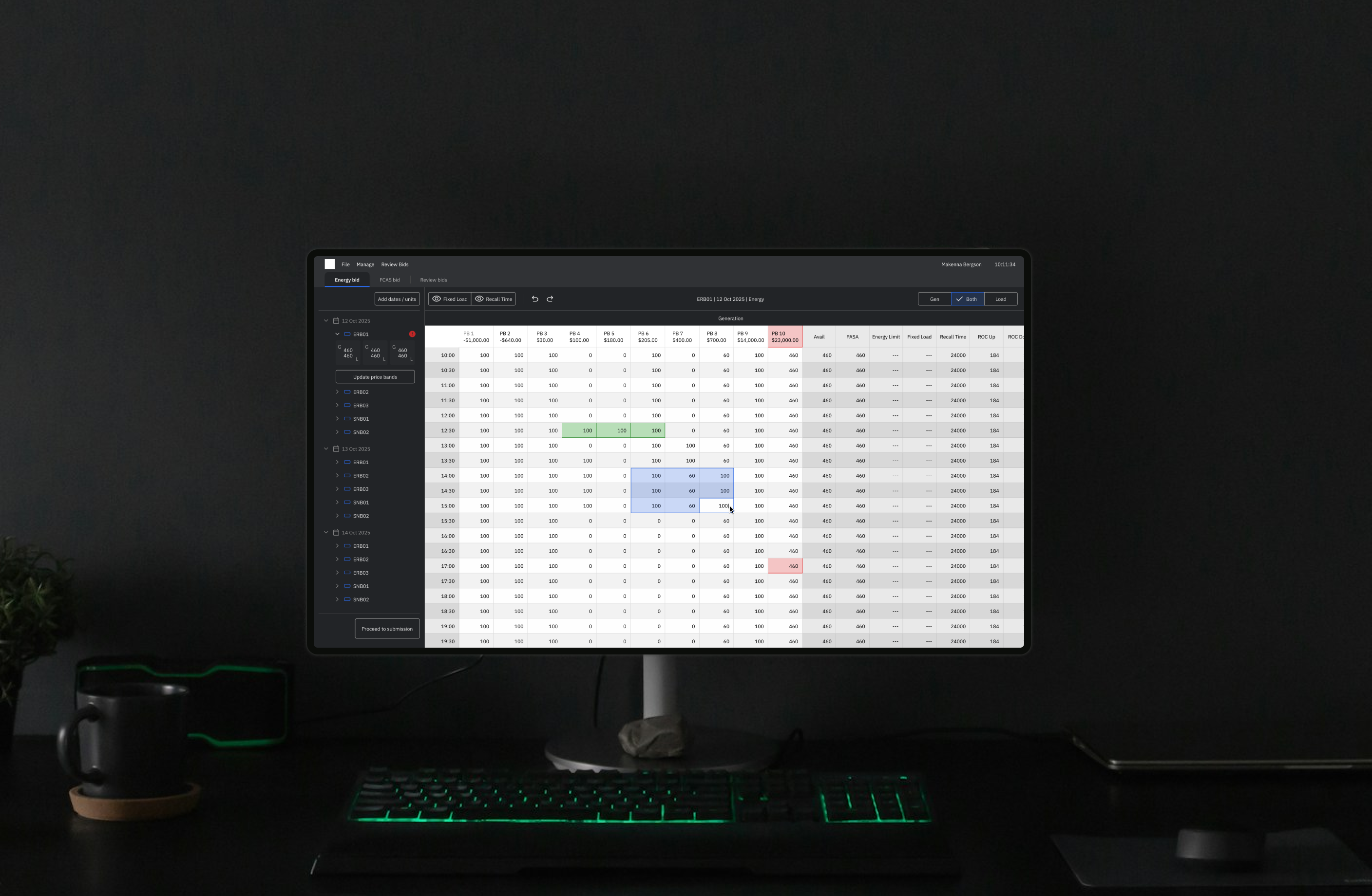
Described by traders as “super clean... I like it”, is a simplified interface with familiar experience patterns that streamlines workflows. Reduced steps to bid from 15 to 3, with neat visualisations that support trading decisions.
Key features
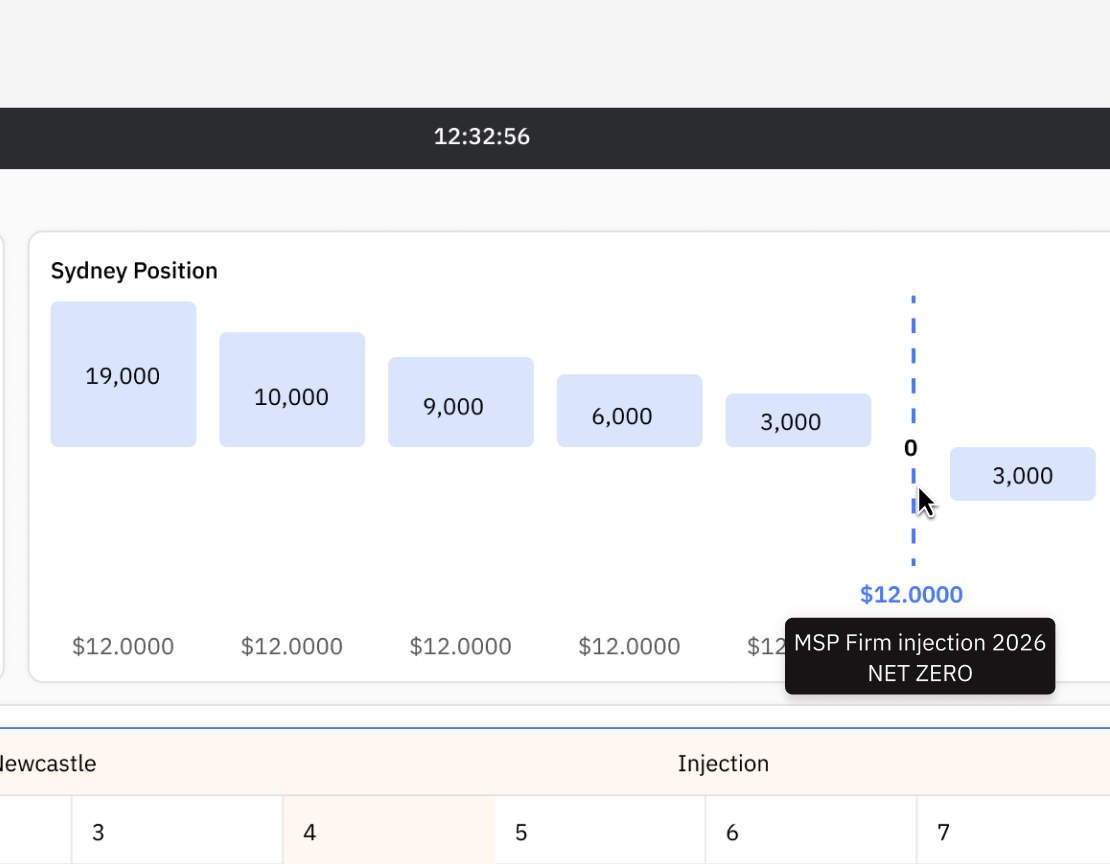
Net 0 trading visualisationDynamically recalculates after trader input to support main bidding activities in STTM markets.
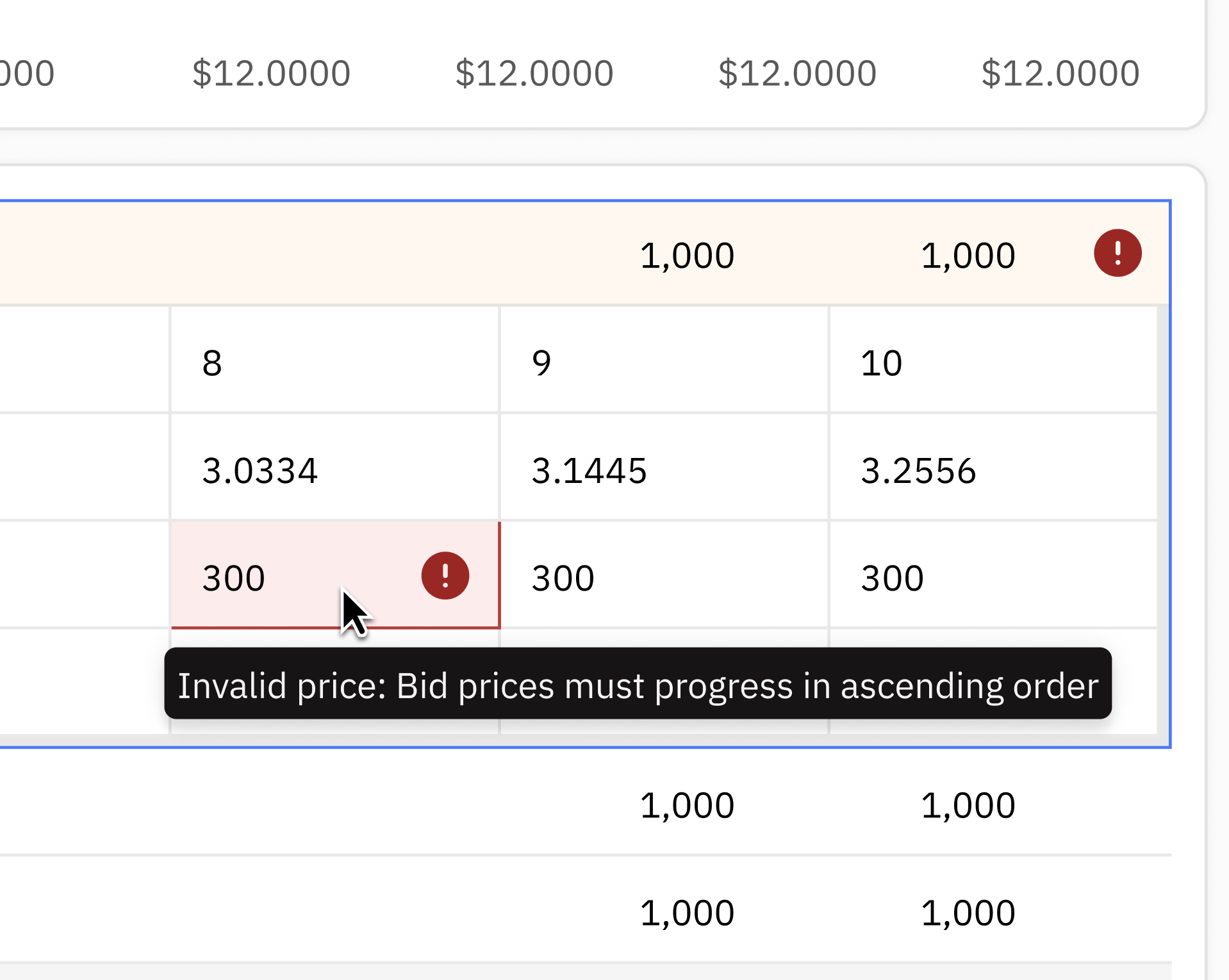
Upfront validation handlingInbuilt grid validations flag after trader input, reducing likelihood of having rejected bids.

Frequently used shortcutsShortcuts and smart actions reimagined to reduce repetitive data entry tasks.

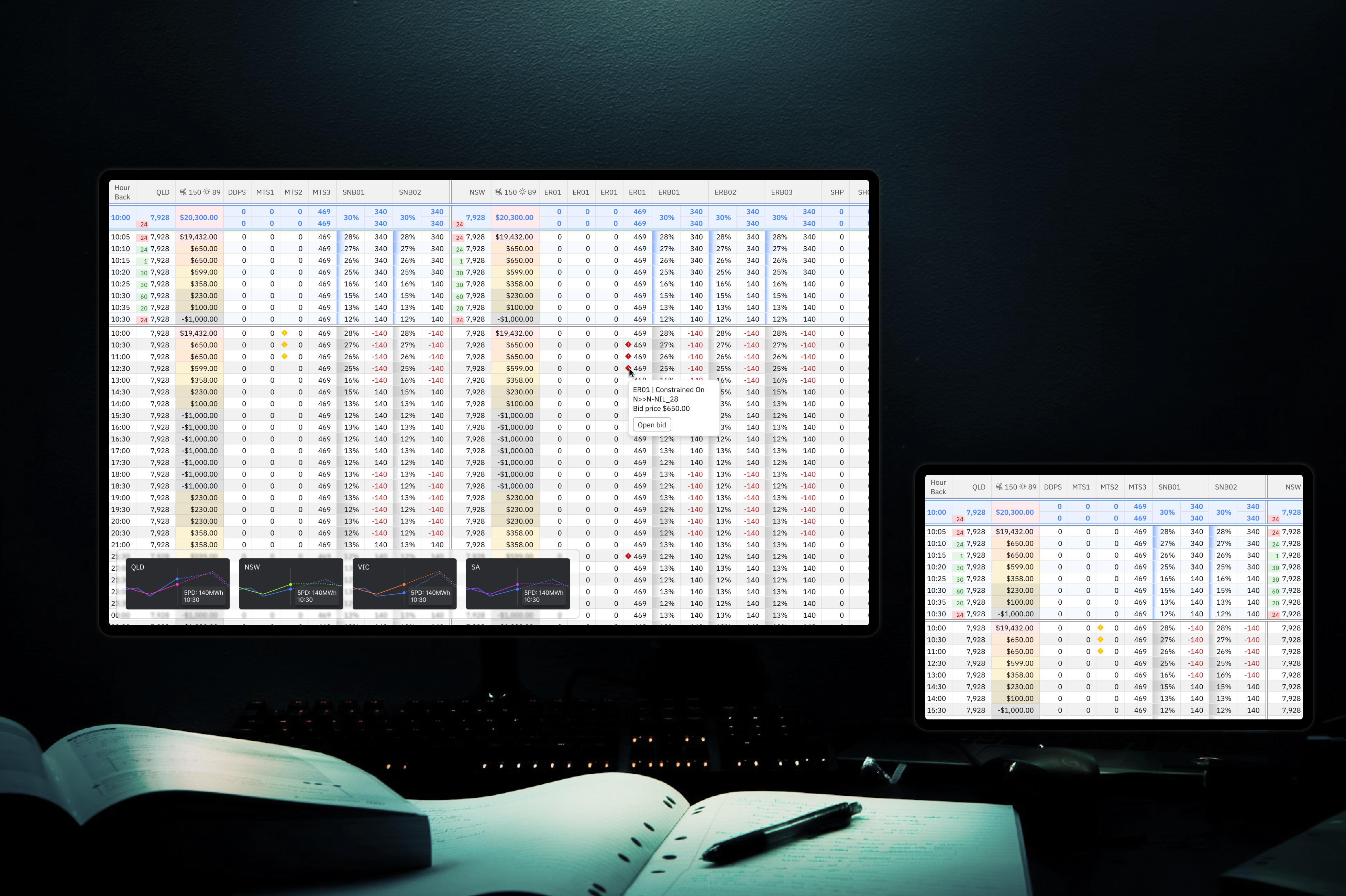
Considerate layout and responsivenessResponsive grid layouts optimised for wide screens to laptops.
Goals & Success
Workshops conducted with Traders and Wholesale department suggested success would mean the following:
Wholesale technology goals

Phased implementation with intention to repeat same approach
Build a maintainable, scalable solution
Minimise trading interuptions
Trading goals
Upgrade from excel based tools to a modern web app
Reduce manual data entry
Prioritise experience and interface as a way to simplify gas trading
Research & Insights
I was hands on with the trading team, delving deep via:
Interviews with stakeholders across all levels
Immersion in trading activities to understand real-time decision-making under pressure
Continuous feedback loops and iteration cycles
Patterns, behaviours, pain points:
Traders have been burned by technology improvements previous, low trust in the team
Traders are unused to modern interfaces; and are hesitant about new ideas
Lack of standardisation between tools puts pressure on cognitive load
Key insights from live trading immersion:
Traders submit bids prematurely to avoid any risk of missing cut off time
Launching the excel spreadsheets can take many minutes (which definitely feels like longer)
Lack of standardisation between tools puts pressure on cognitive load
Strategy & Vision
Design principles for Wolf
1
Simplification is key
2
Speed of workflow
3
Instil trust via system feedback
The goal for Wolf is to create a gas market bidding platform that is intuitive, efficient, and scalable across multiple markets. The design prioritises delivering value quickly with continuous socialisation to ensure alignment with real-world problems.
My plan...
Prototype quickly, validate often, ask the right questions to the right people.
Things to consider
- Keep interactions simple and familiar, traders are unused to modern interfaces in trading tools
- Design for scale
- Accessibility cannot be forgotten
- Design for compliance
Exploration
Experimented with information delivery methods such as notifications.
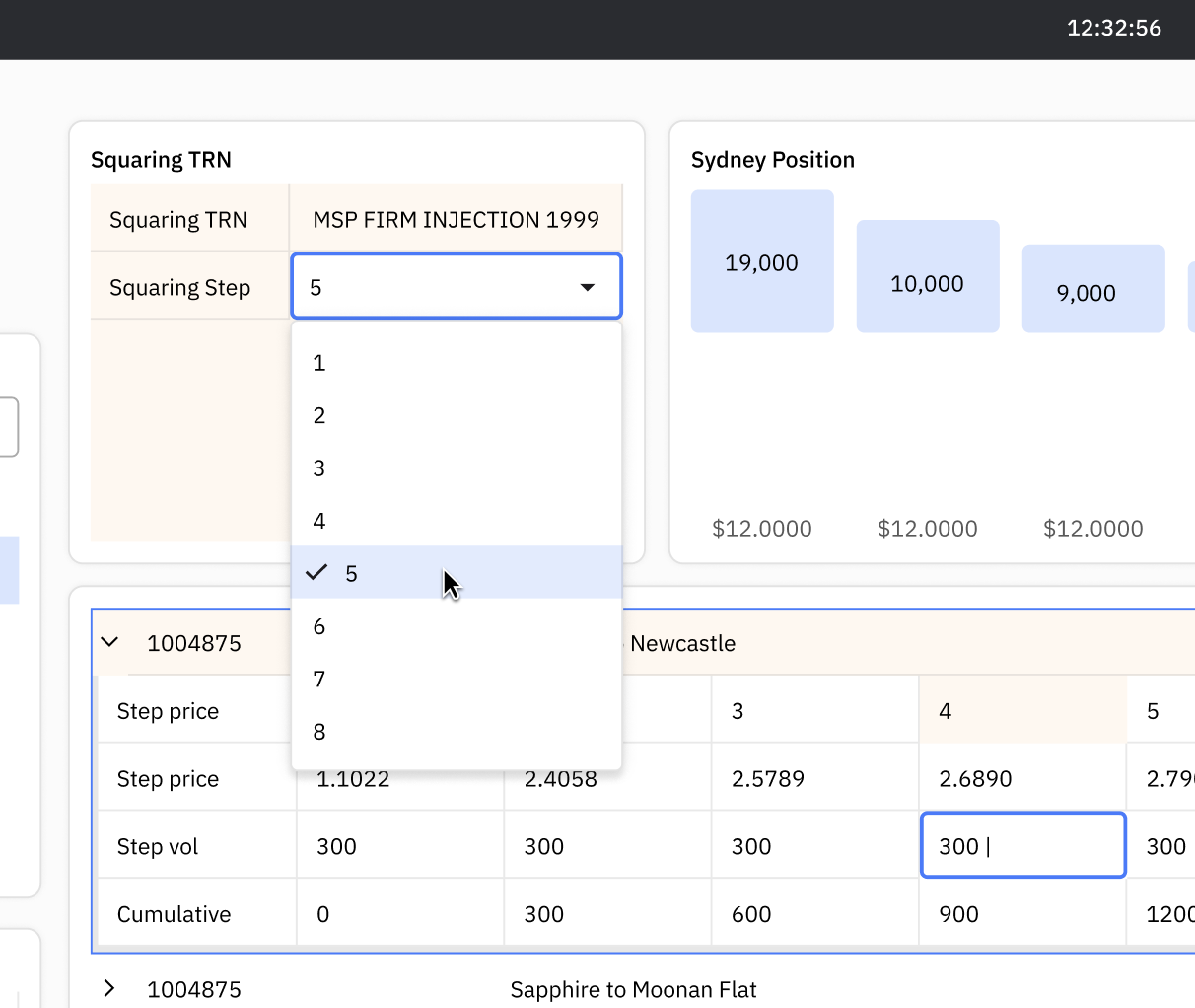
Squaring step feature manual approach, later turns automatic.
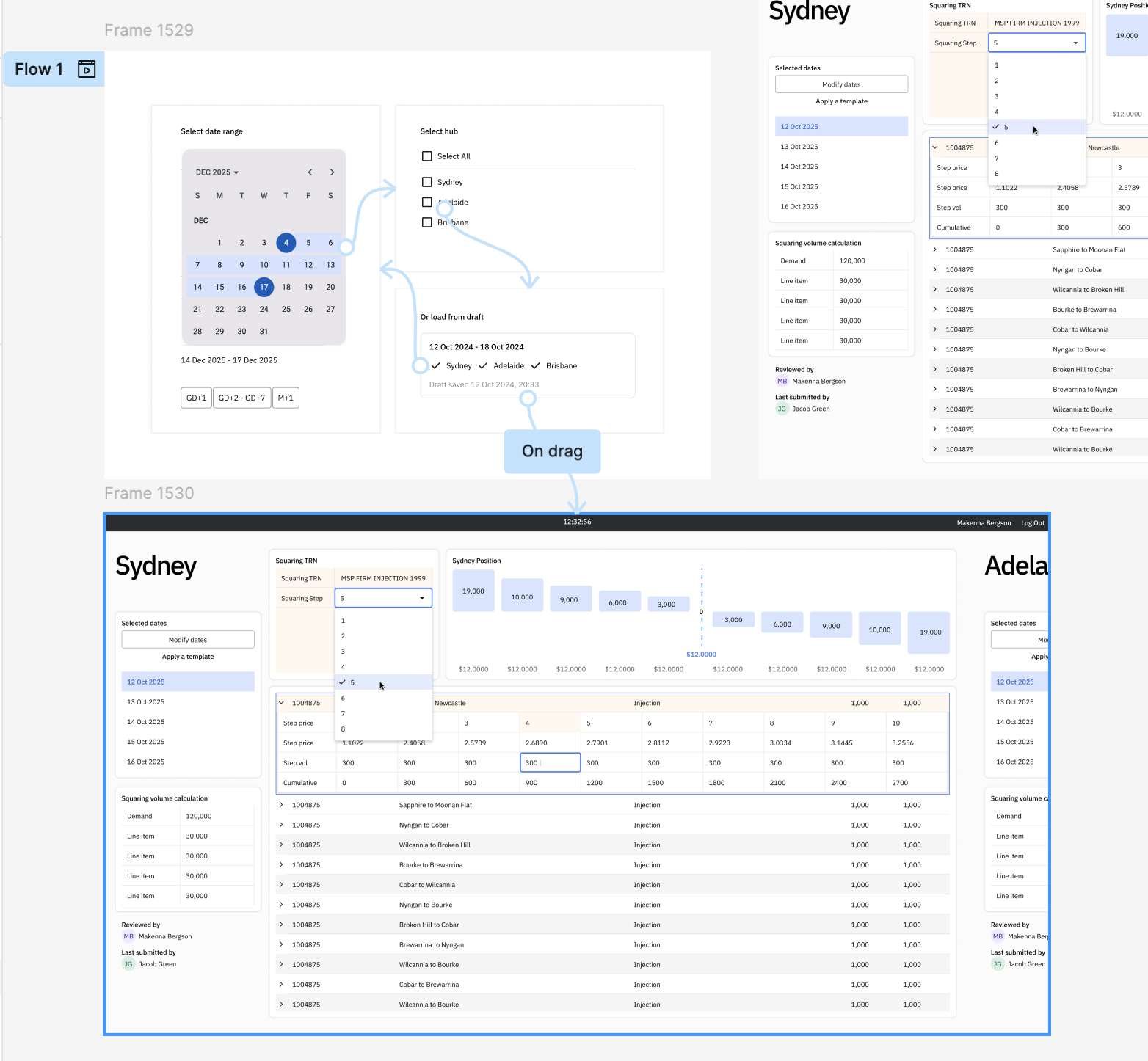
Multi-purpose prototype for devs, traders, analysts, and management.
Real-life trading layout
With widescreens comes the responsibility to consider responsive layouts. I experimented with multiple layouts that would work across various screen sizes from in office to at home.
Trade-offsConstrained by time and tech stack (AG-grid & Angular material UI), I had to carefully consider how best to utilise off the shelf products. In a way it did expedite the design process as there was one less thing to think hard about. But it does limit how expressive the application can be.
See other featured projects 2

Lisa Ly,
Senior Product Designer
This portfolio is mobile-friendly and handcrafted in Figma sites.
Lisa Ly,
Senior Product Designer
Home
Spark
Reimagining gas market bidding for new operator types and intuitive workflows.
Client
Origin Energy
Services
Systems
Research
Strategy
Industries
Energy Markets
Role
Lead Product Designer
Team Makeup
1 x Delivery Manager, 1 x Analyst, 2 x Developers, 1 x Designer
Date
April 2024 - Ongoing
Project has been renamed and images reproduced for privacy reasons.
Context & Problem
The gas trading landscape has evolved: state roles are now merged into two distinct trader types — market operators and commercial operators.
This shift has transformed trader interactions now making legacy platforms redundant.
Wolf aims to unify market functions into a modern platform that accommodates these roles.
Users & Environment
Key users consist of Market Operator type traders, with half of them being management.
Traders submit hundreds of transactions to the market every day, amounting to thousands of data points.
Workflows lack user friendly digital experiences that make gas trading more human.
Final design
Described by traders as “super clean... I like it”, is a simplified interface with familiar experience patterns that streamlines workflows. Reduced steps to bid from 15 to 3, with neat visualisations that support trading decisions.
Key features
Net 0 trading visualisationDynamically recalculates after trader input to support main bidding activities in STTM markets.
Upfront validation handlingInbuilt grid validations flag after trader input, reducing likelihood of having rejected bids.
Frequently used shortcutsShortcuts and smart actions reimagined to reduce repetitive data entry tasks.
Considerate layout and responsivenessResponsive grid layouts optimised for wide screens to laptops.
Goals & Success
Workshops conducted with Traders and Wholesale department suggested success would mean the following:
Wholesale technology goals
Phased implementation with intention to repeat same approach
Build a maintainable, scalable solution
Minimise trading interuptions
Trading goals
Upgrade from excel based tools to a modern web app
Reduce manual data entry
Prioritise experience and interface as a way to simplify gas trading
Research & Insights
I was hands on with the trading team, delving deep via:
Interviews with stakeholders across all levels
Immersion in trading activities to understand real-time decision-making under pressure
Continuous feedback loops and iteration cycles
Patterns, behaviours, pain points:
Traders have been burned by technology improvements previous, low trust in the team
Traders are unused to modern interfaces; and are hesitant about new ideas
Lack of standardisation between tools puts pressure on cognitive load
Key insights from live trading immersion:
Traders submit bids prematurely to avoid any risk of missing cut off time
Launching the excel spreadsheets can take many minutes (which definitely feels like longer)
Lack of standardisation between tools puts pressure on cognitive load
Strategy & Vision
Design principles for Wolf
The goal for Wolf is to create a gas market bidding platform that is intuitive, efficient, and scalable across multiple markets. The design prioritises delivering value quickly with continuous socialisation to ensure alignment with real-world problems.
My plan...
Prototype quickly, validate often, ask the right questions to the right people.
Things to consider
- Keep interactions simple and familiar, traders are unused to modern interfaces in trading tools
- Design for scale
- Accessibility cannot be forgotten
- Design for compliance
1
Simplification is key
2
Speed of workflow
3
Instil trust via system feedback
Exploration
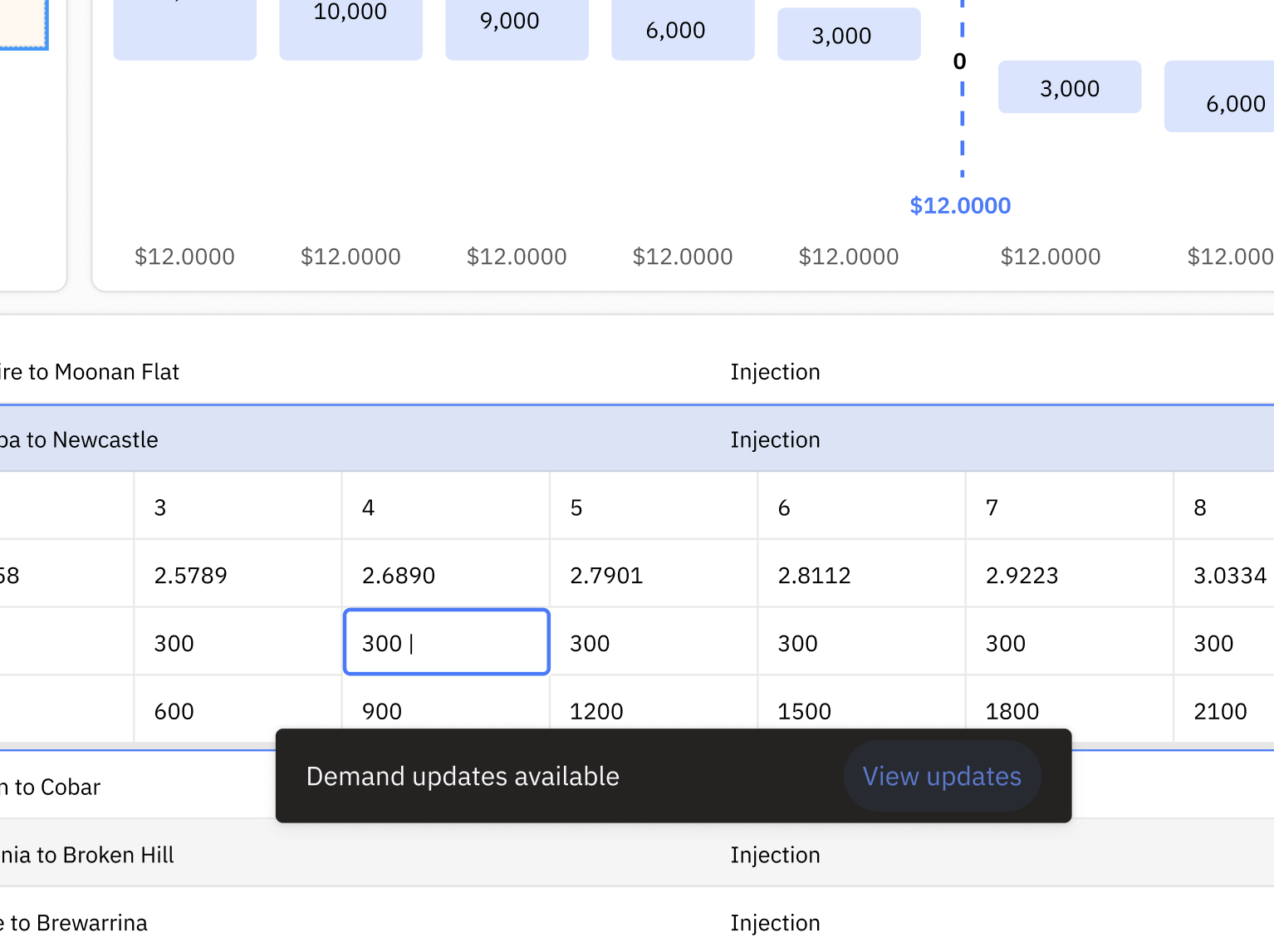
Experimented with information delivery methods such as notifications.
Squaring step feature manual approach, later turns automatic.
Multi-purpose prototype for devs, traders, analysts, and management.
Real-life trading layout
With widescreens comes the responsibility to consider responsive layouts. I experimented with multiple layouts that would work across various screen sizes from in office to at home.
Trade-offsConstrained by time and tech stack (AG-grid & Angular material UI), I had to carefully consider how best to utilise off the shelf products. In a way it did expedite the design process as there was one less thing to think hard about. But it does limit how expressive the application can be.
See other featured projects 2

Lisa Ly,
Senior Product Designer
This portfolio is mobile-friendly and handcrafted in Figma sites.
Lisa Ly,
Senior Product Designer
Home
Fox
Reimagining gas market bidding for new operator types and intuitive workflows.
Client
Origin Energy
Services
Systems
Research
Strategy
Industries
Energy Markets
Role
Lead Product Designer
Team Makeup
1 x Delivery Manager, 1 x Analyst, 2 x Developers, 1 x Designer
Date
October 2025 - Ongoing
Project has been renamed and images reproduced for privacy reasons.subtext
Context & Problem
The gas trading landscape has evolved: state roles are now merged into two distinct trader types — market operators and commercial operators.
This shift has transformed trader interactions now making legacy platforms redundant.
Wolf aims to unify market functions into a modern platform that accommodates these roles.
Users & Environment
Key users consist of Market Operator type traders, with half of them being management.
Traders submit hundreds of transactions to the market every day, amounting to thousands of data points.
Workflows lack user friendly digital experiences that make gas trading more human.
Final design
Described by traders as “super clean... I like it”, is a simplified interface with familiar experience patterns that streamlines workflows. Reduced steps to bid from 15 to 3, with neat visualisations that support trading decisions.
Key features
Net 0 trading visualisationDynamically recalculates after trader input to support main bidding activities in STTM markets.
Upfront validation handlingInbuilt grid validations flag after trader input, reducing likelihood of having rejected bids.
Frequently used shortcutsShortcuts and smart actions reimagined to reduce repetitive data entry tasks.
Considerate layout and responsivenessResponsive grid layouts optimised for wide screens to laptops don’t get in the way of core activities.
Goals & Success
Workshops conducted with Traders and Wholesale department suggested success would mean the following:
Wholesale technology goals
Phased implementation with intention to repeat same approach
Build a maintainable, scalable solution
Minimise trading interuptions
Trading goals
Upgrade from excel based tools to a modern web app
Reduce manual data entry
Prioritise experience and interface as a way to simplify gas trading
Research & Insights
I was hands on with the trading team, delving deep via:
Interviews with stakeholders across all levels
Immersion in trading activities to understand real-time decision-making under pressure
Continuous feedback loops and iteration cycles
Patterns, behaviours, pain points:
Traders have been burned by technology improvements previous, low trust in the team
Traders are unused to modern interfaces; and are hesitant about new ideas
Lack of standardisation between tools puts pressure on cognitive load
Key insights from live trading immersion:
Traders submit bids prematurely to avoid any risk of missing cut off time
Launching the excel spreadsheets can take many minutes (which definitely feels like longer)
Many workaround implemented to avoid risk
Strategy & Vision
Design principles for Wolf
The goal for Wolf is to create a gas market bidding platform that is intuitive, efficient, and scalable across multiple markets. The design prioritises delivering value quickly with continuous socialisation to ensure alignment with real-world problems.
My plan...
Prototype quickly, validate often, ask the right questions to the right people.
Things to consider
- Keep interactions simple and familiar, traders are unused to modern interfaces in trading tools
- Design for scale
- Accessibility cannot be forgotten
- Design for compliance
1
Simplification is key
2
Speed of workflow
3
Instil trust via system feedback
Exploration
Experimented with information delivery methods such as notifications.
Squaring step feature manual approach, later turns automatic.
Multi-purpose prototype for devs, traders, analysts, and management.
Real-life trading layout
With widescreens comes the responsibility to consider responsive layouts. I experimented with multiple layouts that would work across various screen sizes from in office to at home.
Trade-offsConstrained by time and tech stack (AG-grid & Angular material UI), I had to carefully consider how best to utilise off the shelf products. In a way it did expedite the design process as there was one less thing to think hard about. But it does limit how expressive the application can be.
Other featured projects 2

Lisa Ly,
Senior Product Designer
This portfolio is mobile-friendly and handcrafted in Figma sites.